
Inspection & Monitoring →
Imported, calibrated instruments find what is actually wrong before anything is applied.

Food and dairy equipment has to stay clean inside and out for hygiene, product quality, and equipment life. We inspect, clean, derouge, descale, polish, electropolish, and passivate on-site, using citric acid based CitriSurf technology that helps you meet NSF and USDA requirements. We also help you achieve, monitor, and maintain USFDA, HACCP, GFSI, and FSSAI compliance, with the records to prove it.
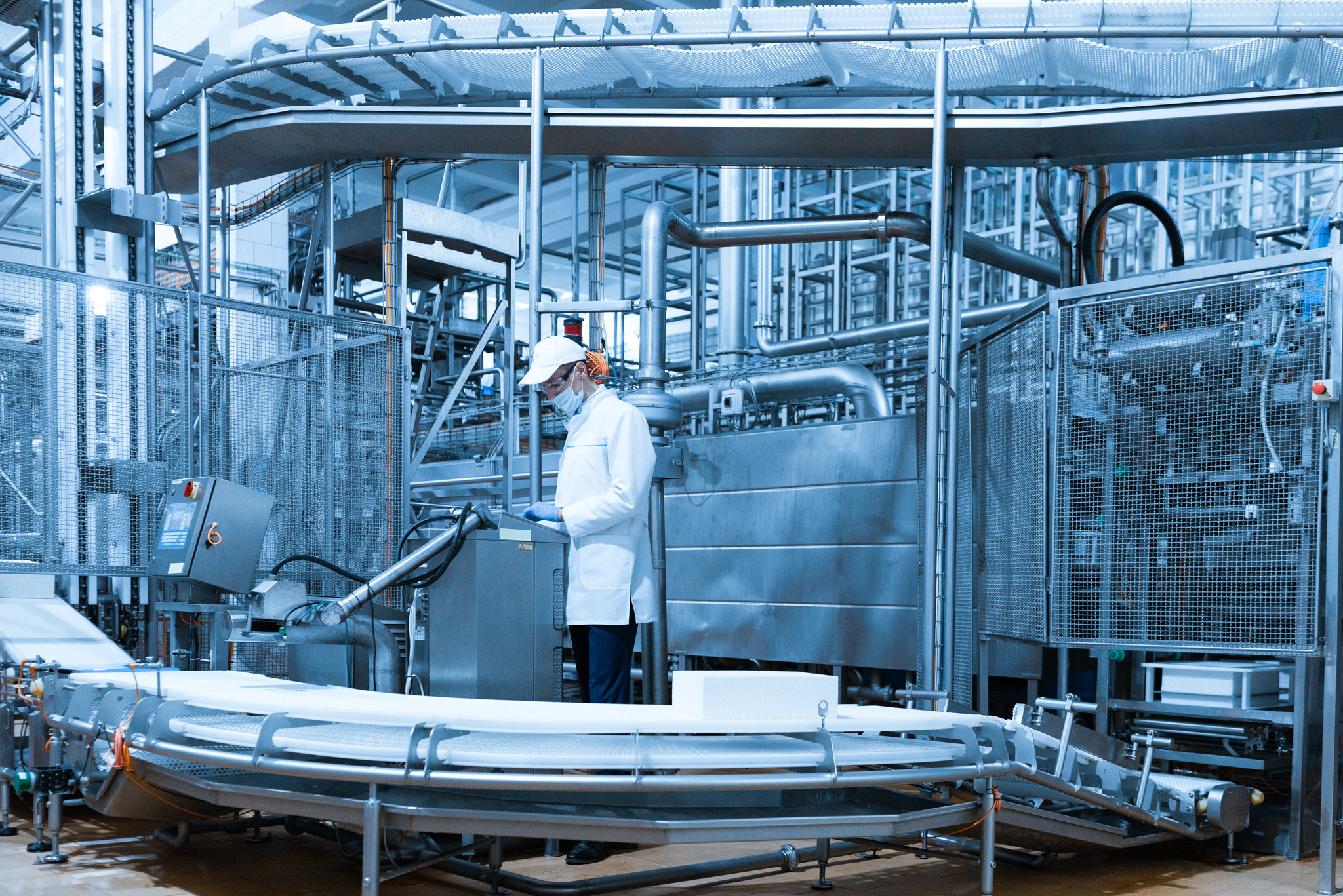
Cleaning the inner surfaces of heavy food and dairy equipment is hard, but it is essential for hygiene, product quality, and equipment life. Stainless steel must stay clean inside and out to lower contamination risk, avoid product rejection, and keep the plant running. A structured cleaning and passivation program removes residue and free iron, improves cleanability, and keeps stainless steel performing in food, dairy, and beverage plants. It also gives you the surface condition and the records that a food-safety audit asks for.
We handle the full surface treatment cycle for food equipment, on-site, with controlled temperature, flow, and pressure so the work is consistent across tanks, transfer lines, and hygienic systems. We also advise on the right procedure to maintain each surface, so the fix holds between visits.
Imported, calibrated instruments find what is actually wrong before anything is applied.
Remove product residue, fats, and free iron from inner and outer surfaces.
Remove rouge from tanks, hot process lines, and steam circuits.
Remove scale, including after installation and on equipment that has run a long time.
On-site or at our premises, to repair and refinish the surface.
Smooth, low-roughness surfaces that resist residue pickup.
Rebuild the protective layer with citric acid based CitriSurf technology.
Documented, so your team can hold the surface between visits.
Every job ends with an inspection report and the documentation your auditor asks for.
Most food plants cannot move a tank or a filling line, so we work where the equipment is. We provide on-call service at your site, planned around your shutdown or changeover window. For parts that can travel, such as smaller components and items that need mechanical polishing or electropolishing, we also do the work at our own premises and return them finished. Tell us which of the two suits the equipment and the schedule.
We follow a clear, repeatable sequence so your equipment is cleaned and protected the same way every time.
Pre-rinse to flush out loose residue and product.
Cleaning wash using detergent chemistry that softens fats and makes them easier to remove. A non-foaming option can reduce pump cavitation and improve efficiency. The first wash goes to drain, and the second can be recovered and reused.
Intermediate water rinse as set out in the procedure.
Passivation using citric acid based, NSF aligned chemistry to extend equipment life and improve surface quality.
Final rinse after passivation for a better surface finish.
Repeatable matters here. A sequence that is written down and followed the same way every time is what turns a good result into a record you can show an auditor.
Our passivation uses citric acid based CitriSurf chemistry. This is worth stating plainly, because passivation is sometimes described as a caustic process, and it is not. Caustic detergent belongs to the cleaning wash earlier in the sequence. Passivation itself is done with citric acid, which removes free iron and rebuilds the chromium-rich protective layer without the fumes or hazards of nitric acid.
The chemistry helps you comply with NSF and USDA requirements, which is why it can be used on food-contact surfaces rather than only on utility equipment.
Free iron is removed and the protective layer rebuilt without the fumes, the handling risk, or the disposal problem that comes with nitric acid.
For a food plant, the two entries that matter most are NSF and USDA. They are the reason this chemistry can be used on food-contact surfaces rather than only on utility equipment.
Compliance is not a one-time job on a food line. A surface passes an audit, then runs hot, wet, and acidic for a year, and drifts. We split the work into three stages so the surface is correct at the start, watched over time, and held there.
Getting the surface right, and getting it documented.
Scheduled inspection, with instruments, on an agreed frequency.
The right procedure, plus repeat visits, so the surface holds.
Food plants answer to more than one authority at once, and the mix depends on where your product is sold. These are the standards our work is built around.
3-A and EHEDG set the surface finish and cleanability an equipment maker builds to. Our polishing, electropolishing, and passivation restore the surface to that condition.
We help you achieve compliance, monitor it over time, and maintain it, with the records to prove it.
Rouging Solutions provides inspection and monitoring, cleaning, derouging, descaling, mechanical polishing, electropolishing, and passivation for food and dairy processing equipment across India. The company uses citric acid based CitriSurf technology, not caustic or nitric acid, which helps customers meet NSF and USDA requirements for food-contact surfaces and follows ASTM A967, ASTM A380, ASTM B600, and AMS 2700. Its compliance work runs in three stages: achieve, by inspecting the surface, correcting it, passivating it, and issuing an inspection report; monitor, through frequency-based visits with imported, calibrated instruments that show whether the surface is holding; and maintain, through a documented procedure and repeat treatment on an agreed schedule. This supports USFDA, HACCP, GFSI, and FSSAI compliance, and restores the surface finish that 3-A and EHEDG hygienic design assumes. Service is available on-call at the customer's site and at Rouging's own premises.
We are here to help! Request advice on your specific application or a quote on our products by filling in the form below.
Passivation removes free iron and rebuilds a protective chromium-rich layer on stainless steel. That lowers contamination risk, keeps surfaces easy to clean, and extends equipment life in food and dairy plants.
No. CitriSurf is citric acid based. Caustic detergent is used in the cleaning wash earlier in the sequence, but the passivation step itself uses citric acid, which removes free iron without the fumes or hazards of nitric acid.
Yes. We passivate with citric acid based CitriSurf chemistry, which helps you comply with NSF and USDA requirements for food-contact surfaces, along with USFDA, EU, and cGMP.
Three stages. Achieve: we inspect the surface, clean, derouge, descale, polish, and passivate it, then issue an inspection report. Monitor: we return on an agreed frequency and re-inspect with calibrated instruments, so you can see whether the surface is holding. Maintain: we give you a documented procedure and repeat the treatment on schedule.
USFDA, HACCP, GFSI, and FSSAI, plus NSF and USDA for the chemistry on food-contact surfaces. Our own work follows ASTM A967, ASTM A380, ASTM B600, and AMS 2700.
Yes, both, and both are commonly requested at site. Mechanical polishing repairs and refinishes the surface. Electropolishing gives a smooth, low-roughness finish that picks up less residue and cleans more reliably.
Five: pre-rinse, cleaning wash, intermediate water rinse, citric acid based passivation, and final rinse.
Either. We provide on-call service at your site, planned around your shutdown window, and we also work at our own premises for parts that can travel, which suits smaller components and polishing work.
Yes. We clean, derouge, and passivate the inner and outer surfaces of tanks, transfer lines, and hygienic stainless steel systems.