
At your site
On-call service, wherever your plant is. Installed systems, large vessels, tanks, and fabricated items that cannot be moved get polished in place, so the equipment never leaves your floor. Our teams cover West, South, and North India.

We polish stainless steel to smooth, cleanable finishes for pharmaceutical, biotech, and semiconductor plants. On-call service at your site or at our own premises, ASME BPE surface finishes from SF1 to SF6, and an inspection report against global standards at the end of every job.
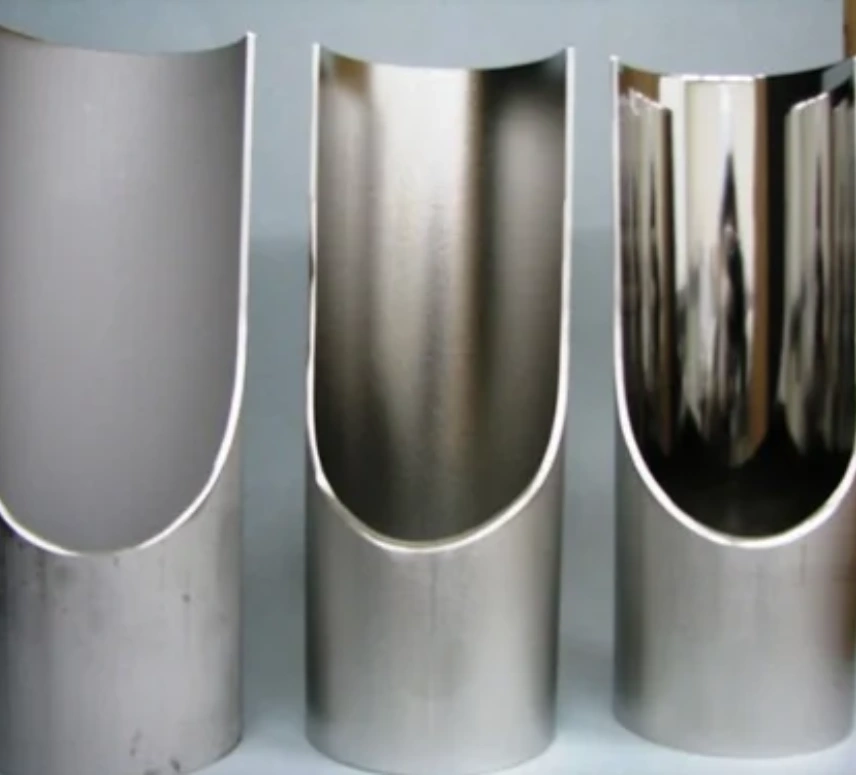
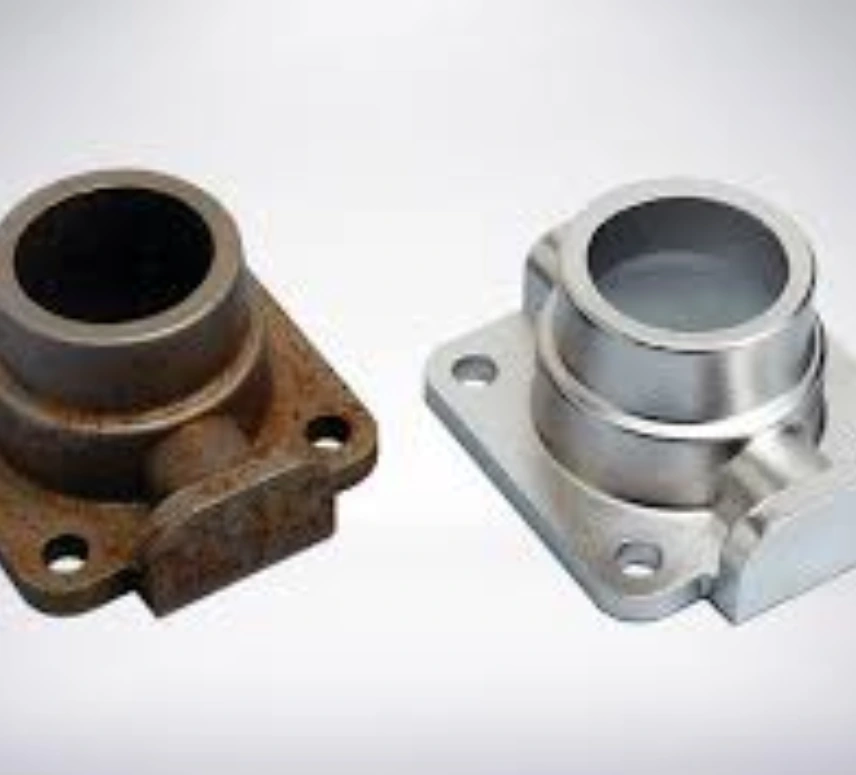
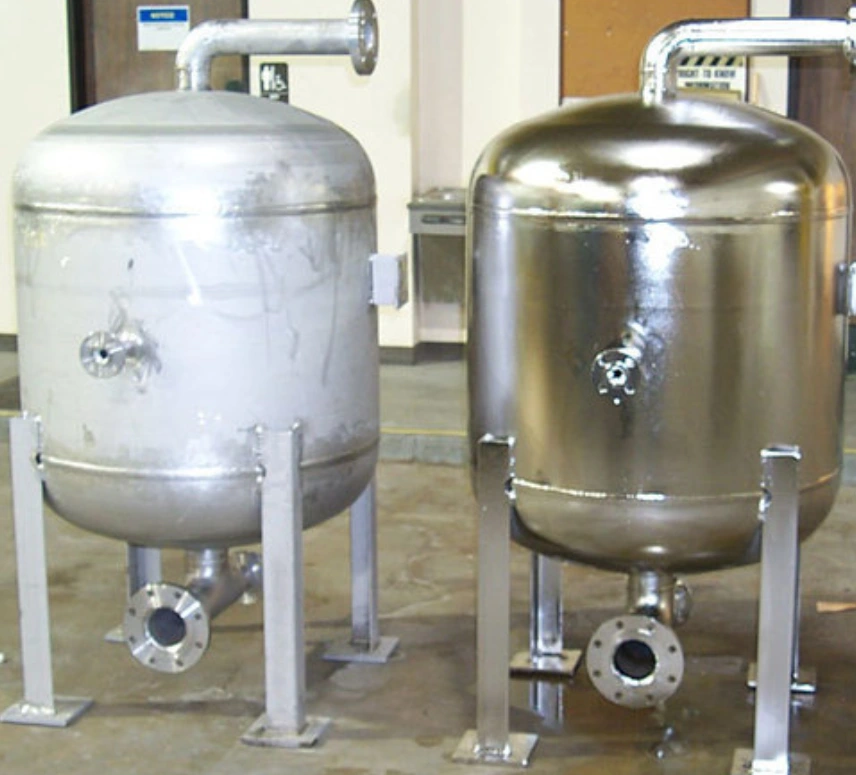
Mechanical polishing improves the finish using controlled abrasives, working the surface smoother by hand or machine. Electropolishing is an electrochemical process. It passes current through the part in a chemical bath, which dissolves a thin, even layer of metal and removes the microscopic high points. The result is a smoother, cleaner surface with better corrosion resistance than mechanical polishing alone.
Many projects use both: mechanical polishing first to set the base finish, then electropolishing to reach the final smoothness.
A smooth stainless steel surface is easier to clean, easier to sterilize, and less likely to hold bacteria or form biofilm. Rough spots trap product and microbes, which is a real problem in pharma and food systems. The smoother the surface, the lower the chance of contamination in your key process areas.
ASME BPE (Bioprocessing Equipment) standards set surface finish grades for stainless steel used in biopharma equipment. The grades run from SF1 to SF6, and they tell you how smooth and how prepared a surface is.
Smoother surfaces reduce the chance of particles and bacteria sticking to the metal, which is why these grades matter in biopharma.
A polished surface that nobody measured is just a shiny surface. Every polishing job we do closes with a written inspection report, produced through a compliance process built around recognized global standards. The report records what the surface condition was, what method we used, and what the finish measured at the end.
That gives you three things:
Proof for your auditor, rather than a verbal assurance that the work was done
A baseline you can compare against at the next inspection, so you can see whether the surface is holding
A record for your maintenance file, tied to the standards your process is judged against
We use imported, fully calibrated instruments for this, so the numbers in the report are measured rather than estimated. See our inspection and monitoring service for how the same process runs on a schedule.
Passivation is often recommended after polishing to improve surface stability and corrosion resistance. Polishing sets the finish, passivation removes free iron and rebuilds the protective layer. We can do both in one project. See our passivation service page for more.
316L stainless steel is widely used in pharmaceutical and hygienic processing because it resists corrosion, lasts well, and handles repeated sterilization. We polish 316L and other stainless grades to the smoothness your process needs.
Electropolishing is widely used in pharmaceutical, biotech, semiconductor, and hygienic process plants, where smooth, cleanable surfaces matter most. We also serve medical device, food, beverage, aerospace, and chemical plants that need a clean, corrosion-resistant finish.
Rouging Solutions provides mechanical polishing and electropolishing for stainless steel across India, supporting ASME BPE surface finishes from SF1 to SF6. Mechanical polishing uses controlled abrasives, while electropolishing is an electrochemical process that smooths the surface, removes free iron, and improves corrosion resistance. Polishing is often paired with passivation and is used in pharmaceutical, biotech, and semiconductor plants.
We are here to help! Request advice on your specific application or a quote on our products by filling in the form below.
Mechanical polishing improves finish through abrasive processing, while electropolishing is an electrochemical process that smooths the surface and improves corrosion resistance further.
Electropolishing is widely used in pharmaceutical, biotech, semiconductor, and hygienic process applications where smooth, cleanable surfaces matter most.
Yes. Passivation is often recommended after polishing to improve stainless steel surface stability and corrosion resistance.
Yes. We support projects that need smooth surface finishes and process-oriented requirements commonly associated with ASME BPE applications.
Both. We offer on-call service at your plant for installed systems, large vessels, and anything that cannot be moved, and we take removable parts and smaller items at our own premises. You pick whichever costs you less downtime.
Yes. Every polishing job closes with a written inspection report, produced through a compliance process built on recognized global standards. It records the starting condition, the method used, and the final measured finish, using imported, fully calibrated instruments.